

What does the research say about raising creative kids, and how can a simple wall of their own artwork help? Science-backed ideas for any home, big or small.
Every child arrives with an inventive streak. They turn a cardboard box into a rocket, a spoon into a microphone, a scribble into a dragon. The question for parents isn't how to install creativity. It's how to protect and feed what's already there.
At Room by Zora, we think a lot about how a home shapes the people in it, especially in smaller spaces where every corner has to earn its keep. Here is what the research suggests about raising creative children, and why something as simple as hanging their artwork can matter more than you'd expect.
The science: what actually helps creativity grow
1. Open-ended play beats prescribed play
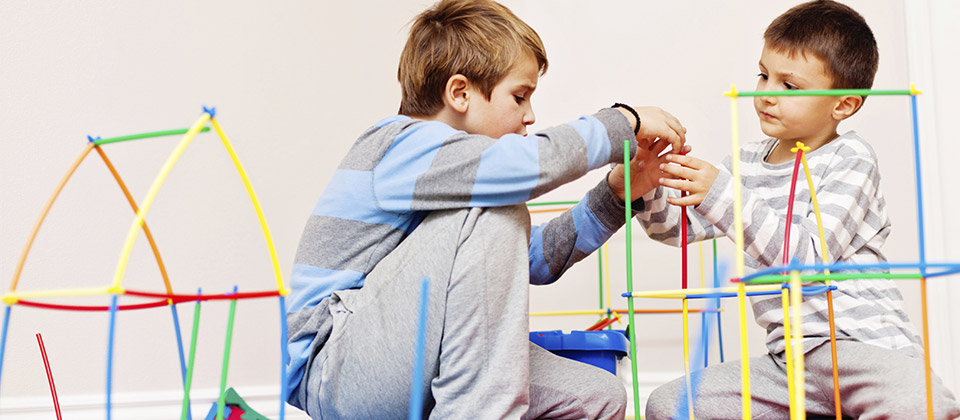
A study comparing different play-based teaching approaches with preschoolers found that open-ended play conditions produced more divergent and original responses on creative-thinking measures. In plain terms: when there's no single "right" way to use the materials, children come up with more ideas, and stranger, more original ones.
At home: Favor materials with no instructions: paper, crayons, clay, fabric scraps, blocks, cardboard. A coloring page with lines to stay inside has its place, but a blank sheet leaves room for imagination.

2. Enjoyment is the engine, so go easy on prizes and pressure
Psychologist Teresa Amabile has spent decades studying creativity and motivation. In a classic field study, girls aged 7 to 11 made paper collages at a party. Some were told they were competing for prizes; others weren't. Independent artist-judges later rated the collages, and the non-competing group's work was judged significantly more creative. The competing group scored higher on some technical dimensions, but not on creativity.
Amabile's broader conclusion is that intrinsic motivation, making something because you want to, is a necessary ingredient for high levels of creative work.
At home: Celebrate the making, not the ranking. "Tell me about this part" does more than "this is the best one."
3. Engagement matters more than talent
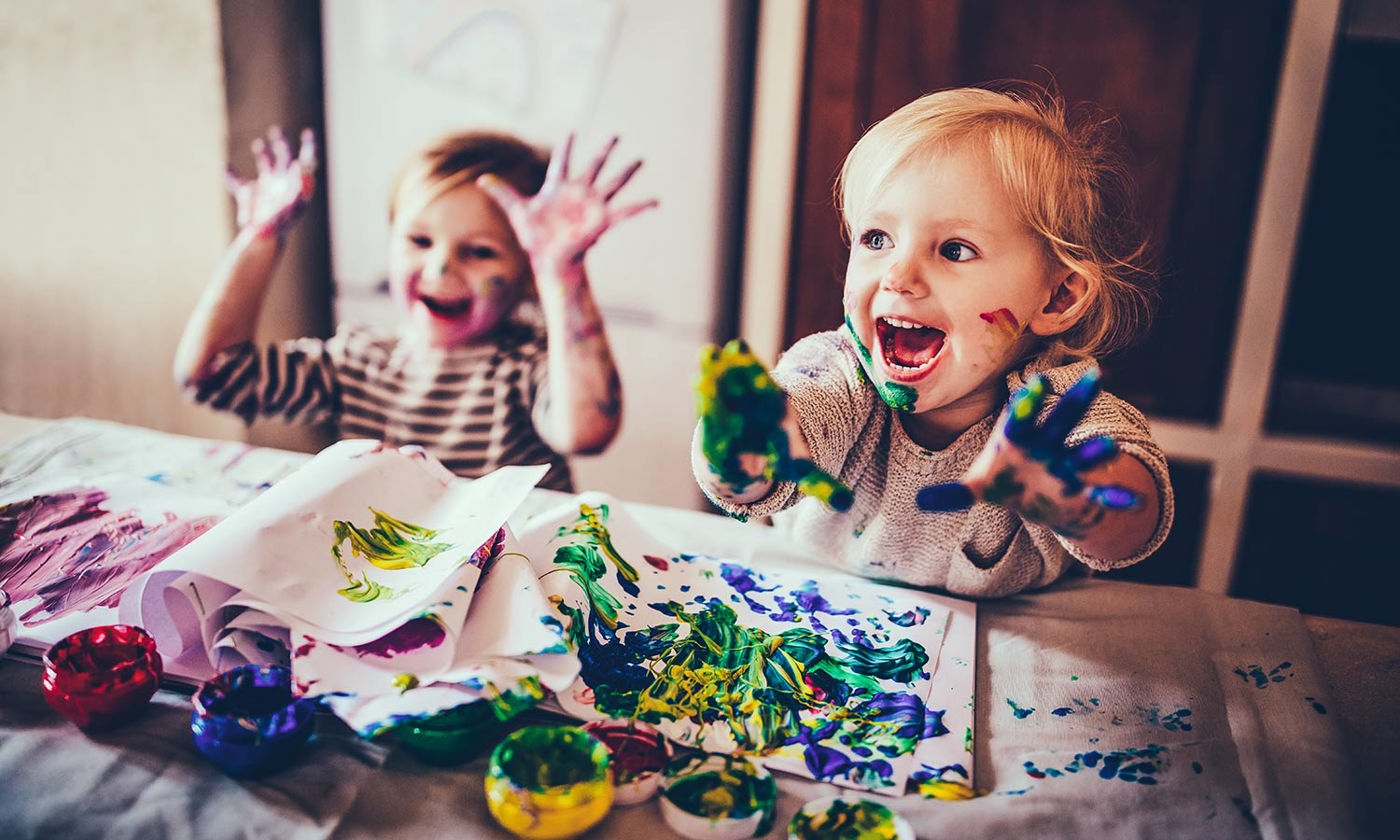
Researchers at University College London analyzed data from 6,209 children in the UK Millennium Cohort Study. Children who did arts activities (including drawing, painting, and making things) most days were more likely to have higher self-esteem at age 11 than those who did them less often. The authors noted that engagement, not ability, seemed to be the key, and painting and drawing were linked to higher self-esteem whether or not parents took part.
This is an association, not proof of cause, but it points in a comforting direction: your child doesn't need to be "good at art" to benefit from making it.
At home: Keep supplies visible and reachable, and make drawing a daily habit, not a special occasion.
4. How parents respond shapes the climate for creativity
A 2024 meta-analysis in Frontiers in Psychology pooled studies on parental involvement and children's creativity. The overall link was small but positive. Autonomy support, meaning parents who attend to a child's own ideas and let them lead, showed one of the stronger positive links. Psychologically controlling parenting showed a negative one.
Separate research on families found that warm, accepting parenting with room for independence goes together with a home climate that encourages novelty, imagination, and persistence in creative efforts.
At home: Follow their lead. Ask questions, let them choose the colors (even if the sky is purple), and resist the urge to fix the drawing.

Showcasing their artwork: a small gesture with a big message
Here is where we want to be upfront: we didn't find a study that directly tests whether hanging a child's drawing on the wall boosts creativity. What we do have is a set of well-supported findings that point the same way:
- It says "your making matters." The self-esteem research suggests that regular engagement in art is what counts. Displaying work turns each finished piece into proof that the effort was noticed.
- It rewards the process, not the performance. Amabile's work suggests creativity thrives on interest, not competition. A gallery wall where everything gets a spot, not only the "best" pieces, keeps the focus on making.
- It's autonomy support in action. When children help choose what goes up and where, they're leading, and that style of parental involvement is linked with stronger creativity.
- It builds a visible record of growth. A rotating display lets children see how their drawing, ideas, and confidence change over time.

How to display art in a small space
You don't need a spare wall or a gallery budget.
- Let your child curate. Ask which pieces they want up, and where. Their room, the hallway, the kitchen: it's their gallery too.
- Use a rotating system. A picture ledge, a clip line, or a simple rail lets you swap pieces in seconds, so new work always has a place.
- Frame a few favorites. Putting a drawing in a real frame tells a child that their work is worth taking seriously. Mix framed pieces with casual ones.
- Keep everything on display, not only the polished work. Scribbles and experiments belong too. Photograph pieces before they retire, and keep the best in a portfolio box.
- Add a tiny label. Their name, the date, and one line in their own words ("My cat flying to the moon") turn a drawing into an exhibit.
- Hang at their eye level. It lets them admire, show off, and revisit their own work.

Five easy ways to start this week
- Set up a small, always-open art spot with paper and a few basic supplies.
- Offer materials, not templates: "What could you make with these?"
- Swap "it's beautiful!" for a curious question about the choices they made.
- Skip contests and rankings at home. Make the doing the reward.
- Create a spot on the wall for their art, and let them choose the first piece.
Creativity isn't a talent to be graded. It's a habit to be encouraged, and one of the simplest ways to encourage it is to make room for it, on the table, and on the wall.
Click link: Browse Room by Zora's picks for kid-friendly spaces and display pieces

Sources
- Amabile, T. (1982). Children's Artistic Creativity: Detrimental Effects of Competition in a Field Setting. Personality and Social Psychology Bulletin. SAGE Journals
- Mak, H. W. & Fancourt, D. (2019). Arts engagement and self-esteem in children: results from a propensity score matching analysis. Annals of the New York Academy of Sciences. UCL Discovery
- Parental involvement and student creativity: a three-level meta-analysis (2024). Frontiers in Psychology. Frontiers
- Jankowska, D. M. & Gralewski, J. (2022). The familial context of children's creativity: parenting styles and the climate for creativity in parent–child relationship. Creativity Studies. DOAJ
- Play-based creativity fostering practices: The effects of different pedagogical approaches on children's creative thinking behaviours. NIF Play library
- Clinkenbeard, P. (1993). Motivation and the Gifted (review of Amabile's Growing Up Creative). NRC/GT, UConn